
By Patty Wilber
Cattle first arrived in Hawaii in 1793. They multiplied! Within fifty years, there were over 25,000 wild beeves roaming the islands. Horses first arrived in Hawaii in 1803, and by the 1820’s they were being used to control all those wild cows. The ranches were huge and horses were able to graze over large areas on native grasses. In 1937, there were 2 million acres of grazing land. By 2015, there were only 750,000 acres.
Like many other places, early horses in Hawaii survived by grazing native pastures, but, also like other places, as people began keeping horses on smaller acreages, it became necessary to provide feed rather than relying on grazing.
Unfortunately, in Hawaii, growing horse hay commercially is impossible. Well, growing is not actually the impossible part. Baling and storing is. Cut hay needs to dry before being baled so it does not mold. Studies on drying alfalfa for proper baling in Hawaii showed that the humidity was so high that the alfalfa had to be artificially dried! It is also the case that even properly dried hay, sitting around, can still go bad!
So, why not make cubes? Alfalfa can produce 11 cuttings a year in Hawaii! There are companies that seem to make alfalfa cubes, in Hawaii, but it looks as though they import their alfalfa (sun-cured Utah alfalfa!) I guess the artificial drying problem still makes it cheaper to import hay to turn into cubes.
Some other damp places (like Sweden), bale grass hay into plastic bags and allow fermentation to occur. Hawaii’s climate is too warm, and instead of the good bacteria fermenting nicely, molding occurs instead. Also, the bacterial species that causes botulism (Clostridium botulinum) does well in warm, damp, molding hay.
Ok, then, horses in Hawaii need hay and grain like horses everywhere, but virtually all the horse feed has to come in by boat, AND because of the heat and humidity, one can’t buy in large quantities and store it.
My friend Debbie invited me to meet her horse and take a trip to the feed store with her so I could get a first-hand look! (And be shocked at the prices!)
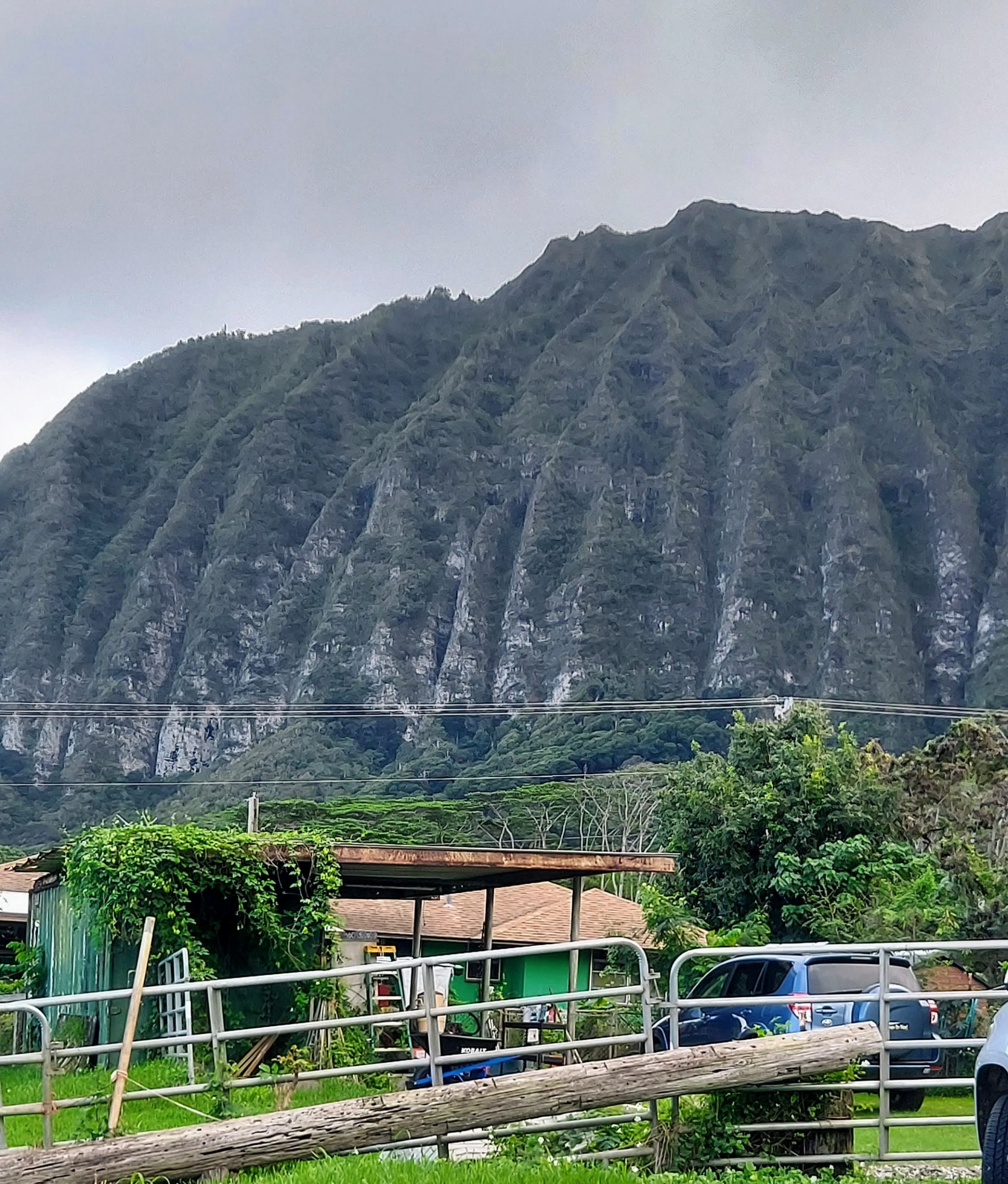
The setting for Debbie’s horse’s home! And that volcanic ridge is hundreds of feet high, even though it doesn’t look like it!
Debbie showed me the tack room. There is a fan-vent to help reduce humidity because the tack tends to mold. Yay! More mold. Also, the B-52 ginormous cochroaches like to eat the oil off reins and sometimes the rein leather itself.
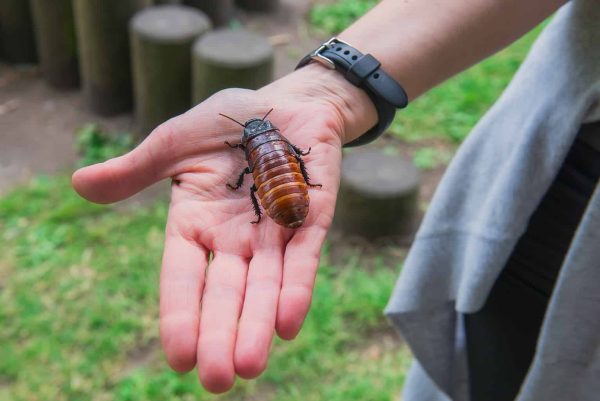

These are newer reins, and you can see the discoloration where the roaches have been scraping away. Debbie keeps her reins in a dryer bag (my picture was bad) to keep them free of roaches. I LOVE the fact that I am too high for roaches. The upper altitude limit for most domestic roaches is about 6500 feet. I live at 6800! Whoop!
Her horse has a covered pen that Debbie re-engineered to improve drainage, because despite being covered, it still got soggy! Some of her feed is stored in hay bags, and some in bins to keep everything dryer and bug-free.

Debbie hauling in a bale of hay. Note the bins in the aisle for feed.
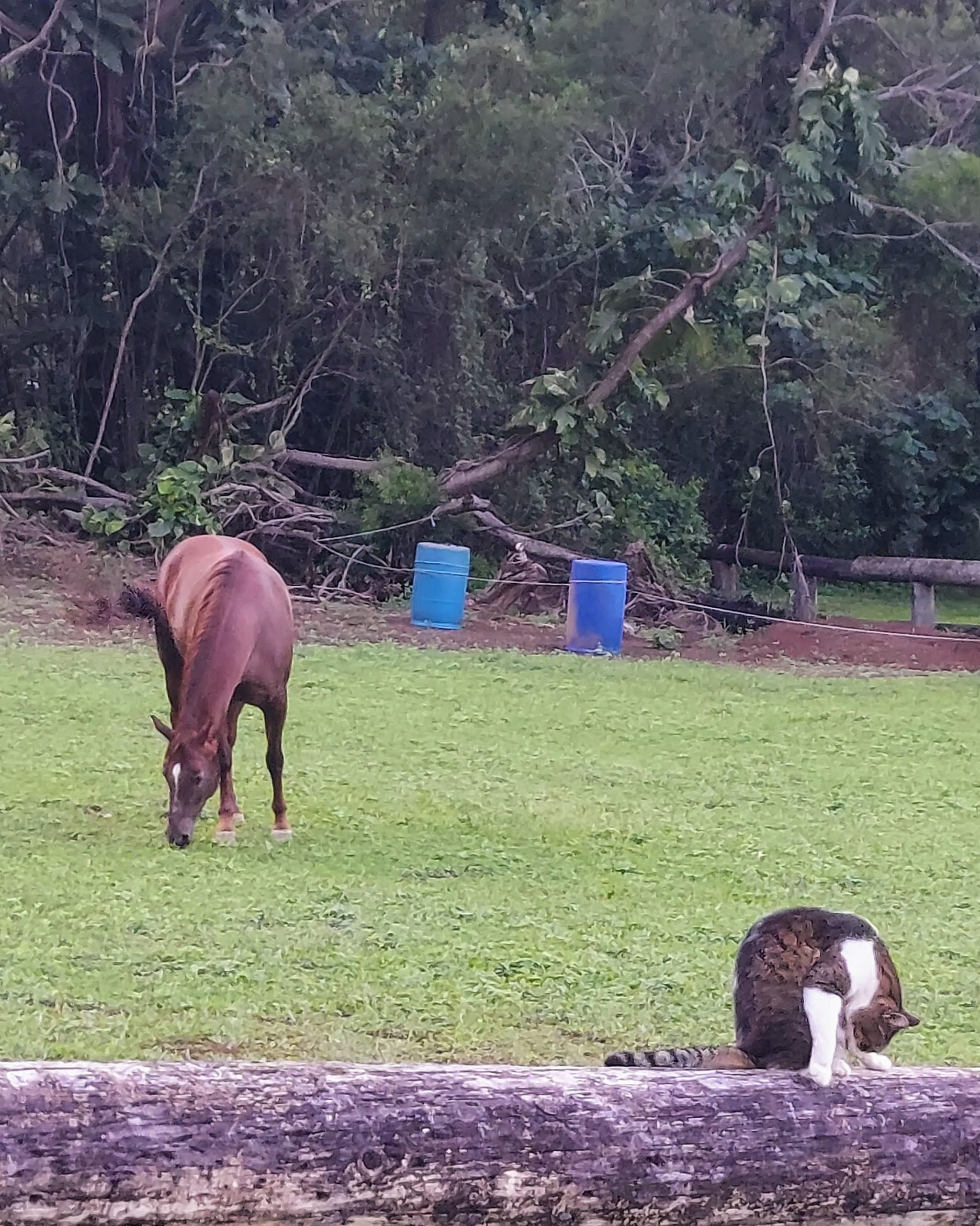
Brawny also gets some pasture time!
At the Waimanalo feed store, we spent a long time talking to one of the managers. All their feed is imported by boat from the mainland. They get weekly shipments, but they have to order about three months in advance, so if some product suddenly gets super popular, it might take three months to get it back in stock!
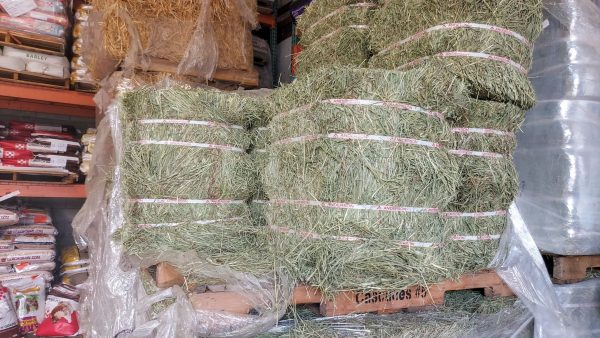
Hay pallets at the Waimanalo feed store!
Debbie buys hay and grain every week or two because, as I keep repeating, it is so humid that the products do not store well. The hay can mold, and the pellets disintegrate. Also, products with corn get infested with some corn-devouring insect and turns to dust within weeks. All this reliance on weekly shipments and lack of ability to adequately store feed gave me anxiety. I bought 1200 bales of grass and alfalfa this year (I did over-buy a bit), and I can store all of it in my barn for a year or more without worry. Going down to having to buy weekly and hope there is not some giant storm or shipwreck that sinks the delivery….yikes!
And then there are the prices! Debbie’s barn charges $325 a month for the facility along with morning, lunch-time and evening feedings, but she has to provide all the food, feeds more hay in the evening, do her own poop cleaning, and supervise Brawny’s pasture time. Aloha Riding Lessons board facilities charge $1100 for full board.
Here is a sample of the feed costs that the Waimanalo Feed Store ran for me. I forgot to include an Equine Senior type product on there.
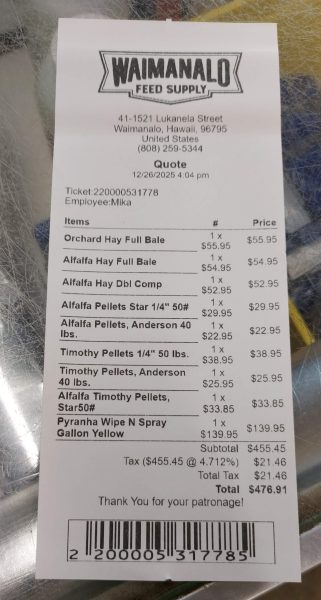
They have 3-string bales for the $55. I paid $11.50 a bale for my hay, delivered. Most of my bales are probably 2/3 of a 3-string bale, so say $16.50 if they were 3-string! I paid $15 for a 50-pound bag of alfalfa pellets! And check out the Pyranha!
I am glad to keep horses here in NM, even though it might be 15F tomorrow night, because if I lived in Hawaii, I’d probably only be able to keep one instead of four (plus the one Heidi has covered).
Happy Friday!


Egads. That’s all I got.
The cockroaches!